
Jawline botox typically refers to botulinum toxin treatment targeting lower-face musculature, often for contour refinement or muscular modulation.
Jawline Filler, Jawline Botox & Facial Masculinisation:
The Rise of Male Aesthetic Treatments
Male aesthetics is no longer considered a niche segment within aesthetic medicine, with demand for minimally invasive aesthetic treatments among male patients continuing to grow in recent years. As awareness around non-surgical treatments continues to grow, practitioners are seeing increasing demand from male patients seeking structural enhancement, subtle rejuvenation, and more defined facial contours.
Search trends around terms such as 'jawline filler', 'jawline botox', 'botox jawline', and even consumer terminology like Brotox reflect this shift in awareness.
However, while public-facing conversations often simplify male aesthetic treatments, practitioners recognise that treating the male lower face requires a different approach to female contouring.
The treatment goal is rarely simply “more definition.”
Instead, male patients often seek outcomes such as:
-
Sharper mandibular structure
-
Improved jawline definition
-
Better chin projection
-
Correction of asymmetry
-
Reduced lower-face heaviness
-
Profile enhancement
-
Subtle rejuvenation without appearing overtly treated
For many practitioners, the challenge lies in delivering visible improvement while preserving masculine identity.

Why Male Lower Face Treatment Requires a Different Approach
Male and female facial anatomy differ significantly, and treatment planning should reflect these differences.
Published aesthetic anatomy literature consistently highlights several structural distinctions commonly seen in male faces, including broader mandibular architecture, stronger gonial angles, increased muscularity, and thicker dermal tissue.¹
In practical terms, this means treatment objectives often differ considerably.

While female contouring may focus on tapering, softness, or contour refinement, male treatment typically prioritises:
Angularity
Structural support
Width preservation
Profile balance
Stronger lower-face definition
This distinction is particularly important when planning jawline filler or lower-face botulinum toxin treatments.
Applying the same contouring principles across all patients risks outcomes that may feel inconsistent with the patient’s desired masculine appearance.
Understanding Male Lower Face Anatomy
A structured lower face in men is often shaped by a combination of skeletal architecture, soft tissue characteristics, and dynamic muscular activity.
Structural
Characteristics
Male facial proportions commonly include:
- Broader lower-face width
- More prominent mandibular angles
- Greater chin projection
- Squarer lower-face shape
- Stronger bony support
These features contribute significantly to perceived masculinity.
Soft Tissue
Considerations
Practitioners may also observe:
- Thicker dermal tissue
- Greater sebaceous activity
- Denser soft tissue behaviour
- Stronger lower-face muscle activity
These factors may influence consultation planning, product selection, and treatment expectations.
Ageing
Considerations
Ageing in the male lower face is not solely a question of volume loss.
Contributing factors may include:
- Dynamic muscular pull
- Skin laxity
- Soft tissue descent
- Structural changes
- Declining skin quality
This is why isolated treatment requests should always be assessed within the context of overall facial structure.
Jawline Botox in Male Patients:
What Practitioners Should Consider
Search demand for 'jawline botox', 'botox jawline', and 'jawline slimming botox' continues to increase. However, the treatment objective varies significantly depending on the patient.
Botulinum toxin may be considered in the lower male face where clinically appropriate, including scenarios involving:
Masseter hypertrophy
Functional tension
concerns
Lower-face contour refinement
Dynamic muscular dominance
Platysmal contribution in ageing patients
That said, caution is important.
In some male patients, reducing lower-face musculature may alter facial width in ways that do not align with masculine aesthetic goals.
This makes consultation particularly important.
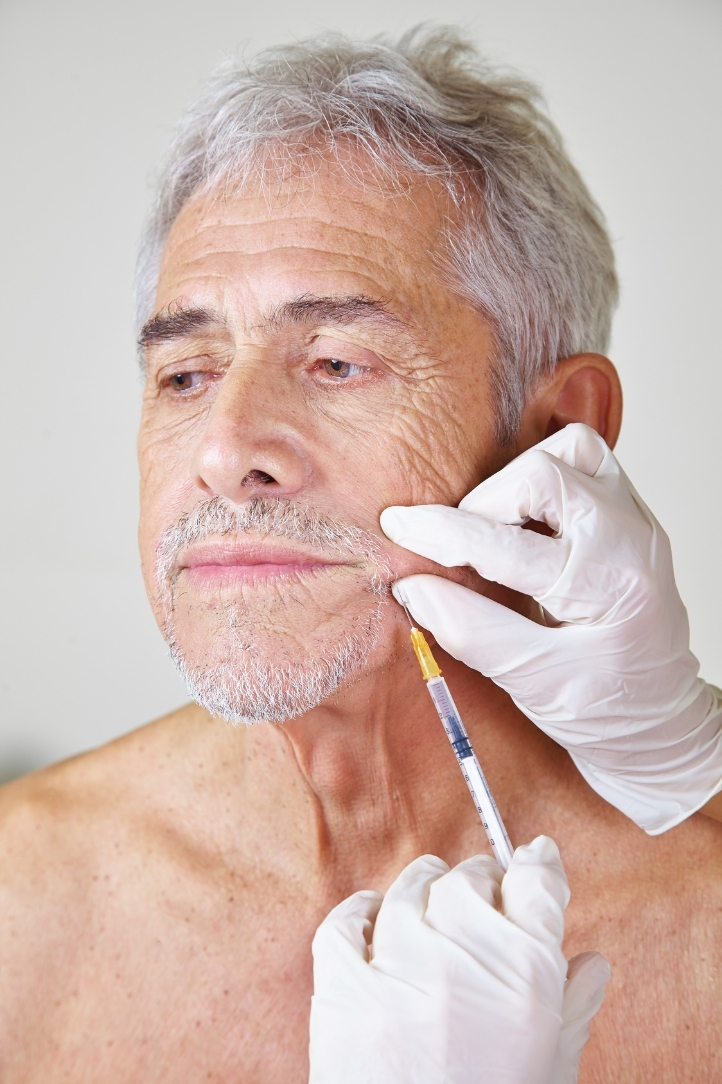
Practitioners should consider:
Existing facial proportions
Baseline lower-face width
Functional habits such as clenching
Asymmetry
Patient expectations
Desired aesthetic outcome
Not every request for 'jawline botox' automatically translates to an appropriate treatment indication.
Jawline Filler
Male Facial Masculinisation
For many male patients, jawline filler is associated with stronger contour definition and profile enhancement.
However, effective lower-face treatment rarely involves isolated filler placement without broader structural assessment.
In many cases, improving overall facial harmony matters more than simply increasing lateral jawline volume.
This is where consultation-led treatment planning becomes especially important.
When considering facial masculinisation, practitioners may assess whether the patient’s concern relates to:
Structural deficiency
Chin projection imbalance
Lower-face asymmetry
Pre-jowl contour changes
Soft tissue heaviness
Age-related support loss
The Chin:
A Critical Consideration
A common oversight in lower-face treatment planning is insufficient chin assessment.
Even where 'jawline filler' is technically well executed, outcomes may feel incomplete if anterior projection or profile balance is overlooked.
Practitioners often consider:
Chin
projection
Width
Lower
facial thirds
Profile
harmony
Relationship between chin and mandibular contour
For male facial masculinisation, chin support may form an important part of the broader treatment conversation.
Combination Treatments Are Shaping Male Aesthetic Practice
As aesthetic medicine evolves, combination treatment approaches are increasingly recognised as valuable in facial aesthetic planning where structural, dynamic, and skin-quality concerns overlap.
For suitable patients, lower-face treatment planning may involve combination strategies depending on diagnosis, treatment goals, and practitioner preference.
Potential considerations may include:
Botulinum
Toxin
Where dynamic muscular contribution is a key factor.
Structural Injectable Treatments
Where architectural support or contour enhancement is required.
Regenerative
Approaches
Where skin quality, collagen support, or tissue health form part of the treatment objective.
Energy-Based
Devices
Where skin laxity or tissue tightening is a priority.
This reflects a broader trend toward personalised treatment planning rather than isolated intervention.
Common Pitfalls in Male Lower Face Treatment
As demand for male treatments grows, certain themes continue to emerge.
Over-Correction
Definition does not always mean more volume.
Excessive structural treatment may create:
- heaviness
- unnatural contour transitions
- widened lower-face bulk
- reduced definition
Feminisation
One of the most significant risks in male facial treatment.
This may occur where treatment unintentionally prioritises:
- narrowing
- soft contour shaping
- reduced lower-face structure
- disproportionate projection
Male treatment planning should remain anchored in masculine facial proportions.
Treating the Request Rather Than the Diagnosis
A patient asking for jawline filler may not necessarily need filler-first intervention.
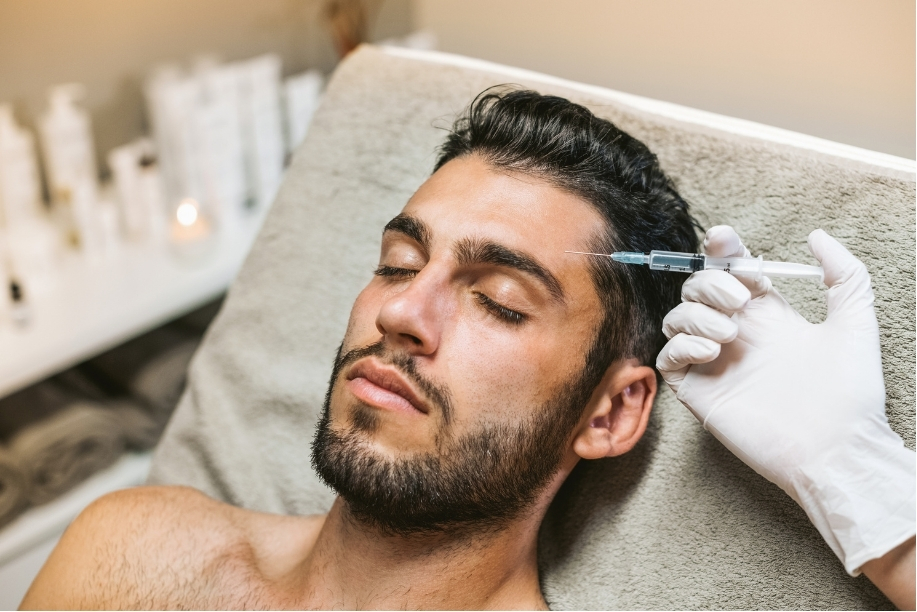
The primary issue may instead relate to:
laxity
muscular dominance
tissue descent
asymmetry
expectation mismatch
Consultation remains key.
Consultation & Compliance Considerations
Male consultations can differ from female aesthetic consultations in both communication style and treatment expectations.
Some patients may arrive with trend-driven language such as "Brotox'"or social-media-inspired reference points. Others may be entirely unfamiliar with treatment terminology.
Useful consultation considerations include:
clarifying
treatment goals
defining
expectations
discussing realistic outcomes
considering staged treatment planning
Where prescription-only medicines are involved, practitioners must remain aligned with current UK prescribing requirements and compliant consultation processes.
Efficient prescribing systems can support safe governance while improving workflow efficiency in busy practices.
What Is Brotox?
“Brotox” is a consumer term commonly used to describe botulinum toxin treatment in male patients. While the phrase has gained visibility online, it simplifies what is often far more nuanced clinical treatment planning.
Male aesthetic treatment is not simply standard toxin treatment applied to a different demographic.
Differences in anatomy, musculature, aesthetic goals, and structural proportions all influence decision-making.

Practical Takeaways for Practitioners
As male aesthetics continues to grow:
✔ Assess the whole face - not just the requested area
✔ Respect masculine anatomical proportions
✔ Consider structural, dynamic, and skin-quality contributors
✔ Manage expectations carefully
✔ Avoid overcorrection
✔ Explore combination approaches where appropriate
Support Your Male Aesthetic Practice with Church Pharmacy
As demand for male aesthetic treatments continues to evolve, practitioners need access to trusted products, regenerative solutions, clinic essentials, and compliant prescribing workflows that support high-quality patient care.
Whether you are refining your injectable offering, expanding combination treatment pathways, or streamlining prescription management, Church Pharmacy supports healthcare professionals across modern aesthetic practice.
For clinics managing prescription workflows, DigitRx offers a secure, efficient e-prescribing solution designed specifically for aesthetic practitioners.
About the author
Church Pharmacy
Church Pharmacy is a GPhC-registered UK pharmacy specialising in medical aesthetics. We support healthcare professionals with compliant dispensing, award-winning service, and expert insights into the latest treatments, products, and industry trends. Through our blog, we share practical guidance and trusted updates to help clinics grow safely, efficiently, and confidently.